

Main Page » Conferences »
PTEE 2026

PTEE 2026
13th International Conference on Physics Teaching in Engineering Education
Socratic Roots - AI Wings: Transforming Physics and Engineering Education
May 27-29, 2026 Warsaw University of Technology Warsaw, Poland
About PTEE 2026 and its Participants
Following the community-building momentum from PTEE 2024 in Rosenheim — which brought together 80 participants from 14 countries and 50 institutions — PTEE 2026 continues the tradition of discussing innovative approaches and fostering collaboration in transforming engineering education. The shared goal is to exchange ideas, showcase innovative practices, and co-design the future of academic physics teaching — grounded in evidence, enriched by technology, and connected through a vibrant European network.
PTEE 2026 brings together a diverse community: staff of physics and science faculties, engineering educators, curricula and microcredentials developers, school teachers and educators, students and PhD candidates, cognitive scientists, and STEM education researchers.
Conference Theme
This edition’s PTEE theme invites participants to explore and reflect on the fascinating interplay between time-tested dialogic teaching methods and the rapidly evolving landscape of AI-enhanced practices in physics and engineering education, without making AI the central or exclusive topic of the conference. It welcomes contributions that critically examine responsible uses of AI in the field, from risk-aware implementation to accountable integration. At the same time, the submissions that center on the enduring power of inquiry-driven, Socratic-style learning are highly encouraged. While some sessions may explore thoughtful, evidence-based, and ethical uses of AI in teaching, the conference also values broader discussions on teaching practices, curricula development, and transformations in physics and engineering education.
Specifically, for those interested in AI-focused discussions, the conference will address key questions, including:
- How can AI tools support, rather than replace, traditional pedagogical approaches in physics and engineering education?
- What role does the Socratic method play in learning environments augmented by AI?
- What competences should future engineers develop in a world increasingly shaped by AI?
- What ethical considerations arise in the intersection of AI and physics education?
Please note that AI-related topics are just one segment of the conference scope. All contributions aligned with the broad perspective of exploring and transforming physics and engineering education are equally welcome.
Conference Timeline

Conference Highlights
- Keynote and invited talks on pedagogical methodologies in physics and engineering education, including particularly those related to AI-enhanced practices
- Parallel presentation sessions
- Workshops and tutorials on innovative teaching methods
- Poster sessions
- Panel discussions and structured debates
- Networking opportunities
- Cultural program in Warsaw

Optional campus lab visits and cultural activities will also be announced.
PTEE 2026 activities will take place in the strict center of Warsaw. The city offers a unique blend of historical charm and contemporary progress, providing excellent public transport and international flight and railway connections.
The hosting institution, Warsaw University of Technology (Politechnika Warszawska, WUT), is one of Poland's most prestigious technical universities, founded in 1826. The rich history of innovation and excellence in engineering education makes it the perfect venue for PTEE 2026.
There are numerous accommodation options near Warsaw University of Technology (WUT), ranging from budget-friendly hostels to comfortable apartments and hotels, many located within walking distance of the campus. If one prefers to stay just outside the immediate center, there are still many excellent choices, as the area is well connected to the metro (Line 1, Metro Politechnika station), making it easy to reach the University and travel throughout Warsaw.
Download our Discover Warsaw — Sightseeing Guide
Conference Contribution Formats
All presentation sessions are scheduled for 20-minute slots (15 minutes content + 5 minutes for Q&A/discussion).
Workshops are planned to take place in smaller groups, with time slots ranging from 30 minutes to 2 hours (depending on the activity).
To foster innovation, interactivity, and attendees' involvement in a dynamic conference experience, diverse forms of presentation (beyond traditional slide decks) and workshops are encouraged, including:
- interactive demonstrations of physics experiments, software, tools, or prototypes,
- exhibits showcasing hands-on artifacts, multimedia, technology, and installations,
- live performances, role-plays, multimodal experiences, or experiential activities involving participants (e.g., through live polling or group challenges),
- mini-workshops, workshops, and roundtable sessions focused on specific topics, techniques, and methodologies, leading the participants through interactive activities of different types (including e.g., teaching methods demonstration, as well as software and digital tools usage).
If the presentation or workshop requires special needs (e.g., water/power for experiments, special equipment, or additional setup time), please indicate this in the proposal (abstract form).
Poster sessions, allowing for one-on-one discussion, will take place on two days of the conference. The stands for up to A0 formats will be provided; however, the B1 format for the conference posters is recommended.
Submissions and Review Process
Abstract template:
Abstracts should be submitted by email: PTEE2026@fizyka.pw.edu.pl
When submitting your abstract, please specify whether you're interested in giving an oral presentation, poster presentation, or conducting a workshop session. If there are special presentation requirements, please also indicate them in the abstract form.
All submissions will undergo peer review by SEFI experts and the local conference organizers' committee for relevance, rigor, transparency of evidence, applicability to engineering physics contexts, and ethical considerations. Based on this review, a decision will be made regarding acceptance to the conference (please refer to the Conference Timeline for dates and deadlines).
All accepted contributions will be published in the digital version of the book of abstracts.
Submitted and accepted papers will be published after the Conference by the WUT Publishing House in the digital version of the Conference Proceedings (with ISBN).
Conference Fee
• 400 EUR / 1700 PLN — academic staff, teachers, educators
• 350 EUR / 1500 PLN — PhD students
• 325 EUR / 1380 PLN— students
- Early bird fees: 350 EUR / 1500 PLN for academics and 300 EUR / 1300 PLN for other participants who register until April 15, 2026.
Fees cover the cost of conference sessions, coffee&snacks, lunch breaks, get-together in a pub, dinner, conference materials, preparing the conference publication by Warsaw University of Technology Publishing House.
Payment details
Politechnika Warszawska
Bank: PEKAO S.A. w Warszawie
IBAN: PL 65 1240 2092 9522 1050 0100 0000
SWIFT: PKOPPLPW
title: "name, last name + PTEE2026"
After completing your payment, please send an email to PTEE2026@fizyka.pw.edu.pl including personal details (full name; affiliation/institution; payment amount; date of payment).
For participants requiring an invoice, please provide additional information, including: complete billing address; tax identification number and/or any other fiscal details required by your institution.
Invited Lecture and Two-Day MANIM Workshops
This year’s conference will offer a special opportunity for all participants interested in modern, engaging science education. The programme will include an invited lecture and two-day practical workshops on Manim — the powerful animation library known from the work of 3Blue1Brown.
The sessions will be led by Dr. Uwe Zimmermann (Uppsala University), an award-winning teacher and active member of the Manim community, who has been successfully using Manim to create teaching materials in physics, electronics, and engineering.
The invited lecture will present inspiring examples of how animations can support the teaching of complex scientific concepts, while the workshops will give participants hands-on experience in creating their own visualisations. From installation and first steps to more advanced animation techniques, the workshops are designed to help attendees discover how Manim can be used in practice to illustrate physical phenomena and make lectures and tutorials clearer, more attractive, and easier to understand.
We warmly encourage all conference participants to join this unique part of the programme and explore how animation can bring science teaching to the next level.
Registration Information
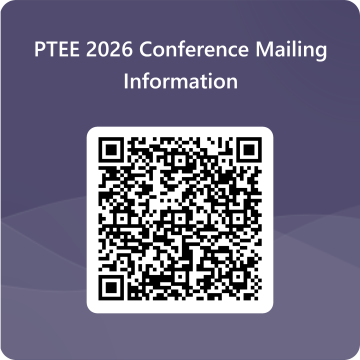
To stay updated on registration dates, submission deadlines, and conference announcements, please subscribe to our mailing list.
The 12th International Conference on Physics Teaching in Engineering Education PTEE 2024 was held at Rosenheim University of Applied Sciences (Germany). Learn more at:
https://www.th-rosenheim.de/die-hochschule/fakultaeten/fakultaet-fuer-angewandte-natur-und-geisteswissenschaften/didaktik/ptee2024/
Conferences on Physics Teaching in Engineering Education are organized under the auspices of SEFI Physics Group (https://sefiphysics.be), being a part of SEFI (European Society for Engineering Education). SEFI is a non-profit international organization considered the largest network focused on engineering education in Europe, active since 1973 (https://www.sefi.be).
